

Quick Summary: Workplace safety risks in air transport are complex, affecting ground crew, pilots, and maintenance staff. Key hazards include vehicle collisions, manual handling injuries, chemical exposure, and crew fatigue. Effectively managing these occupational health and safety challenges requires a systematic approach to protect workers and comply with strict regulations.
Understanding the High Stakes of Air Transport Safety
The air transport industry operates on precision and safety, yet this high-stakes environment is filled with significant and diverse workplace safety risks. From the constant activity on the tarmac to the detailed work in maintenance hangars, every role presents hazards that can lead to severe injuries or long-term health issues. Recognizing these dangers is the foundational step in creating an effective safety culture.
These are not theoretical risks; they are the daily reality for thousands of workers. Ground crew navigate a congested environment of moving vehicles, while maintenance engineers handle hazardous chemicals and work at heights. For a broader perspective on the critical field of aviation safety, numerous detailed resources are available.
The Scope of Aviation Workplace Dangers
The spectrum of workplace safety risks in air transport is extensive, covering everything from overt physical threats to subtle psychological strains. Unlike a typical office environment, a single safety lapse in aviation can have catastrophic consequences, affecting not only the worker involved but also flight operations and public safety.
This dynamic setting demands a proactive, not reactive, approach to safety. A minor fluid spill on the apron could cause a serious fall, just as unaddressed pilot fatigue can impair critical decision-making in the cockpit.
A robust safety management system functions like an aircraft's pre-flight check. It's not about box-ticking for compliance; it's an operational necessity that systematically identifies potential issues before they escalate into incidents.
Key Risk Categories Across Operations
To effectively manage these hazards, it is useful to categorize them by operational area. Each zone—airside, maintenance, cargo, and cabin—has its own unique risk profile.
The table below outlines the primary hazards faced by workers in different operational sectors.
Key Safety Risk Categories in Air Transport Operations
| Operational Area | Primary Physical Risks | Primary Psychosocial Risks |
|---|---|---|
| Airside/Ramp | Vehicle collisions, slips and falls, noise exposure, manual handling injuries, extreme weather exposure. | High-pressure time constraints, communication breakdowns, situational awareness overload. |
| Maintenance | Chemical exposure (fuels, solvents), working at heights, confined space entry, electrical shocks, ergonomic strains. | Complex problem-solving under pressure, fatigue from shift work, responsibility for airworthiness. |
| Cargo Handling | Musculoskeletal injuries from heavy lifting, being struck by moving cargo/equipment, falls from loading docks. | Repetitive work monotony, pressure to meet tight turnaround times, isolation during night shifts. |
| Cabin & Flight Crew | Turbulence-related injuries, ergonomic issues from prolonged sitting/standing, exposure to communicable diseases. | Extreme fatigue and jet lag, managing disruptive passengers, high-stakes decision-making stress. |
By understanding these distinct yet interconnected risks, organizations can develop a comprehensive safety strategy that protects every worker, regardless of their role.
Navigating Dangers in Airside and Ground Operations
The airport apron, or tarmac, is a scene of controlled chaos. It's an intensely energetic environment where aircraft, ground support equipment (GSE), and personnel move in a tightly coordinated dance. A single misstep can have severe consequences, making airside and ground operations one of the most hazardous areas in aviation, rife with serious workplace safety risks in air transport.
Consider the simultaneous activities: baggage carts moving swiftly, fuelling trucks maneuvering in tight quarters, and catering vehicles approaching aircraft. This congestion creates a constant and significant risk of collisions. For personnel on foot, exceptional situational awareness is crucial to avoid being struck by moving machinery—a danger exacerbated by loud noise, adverse weather, or poor visibility.
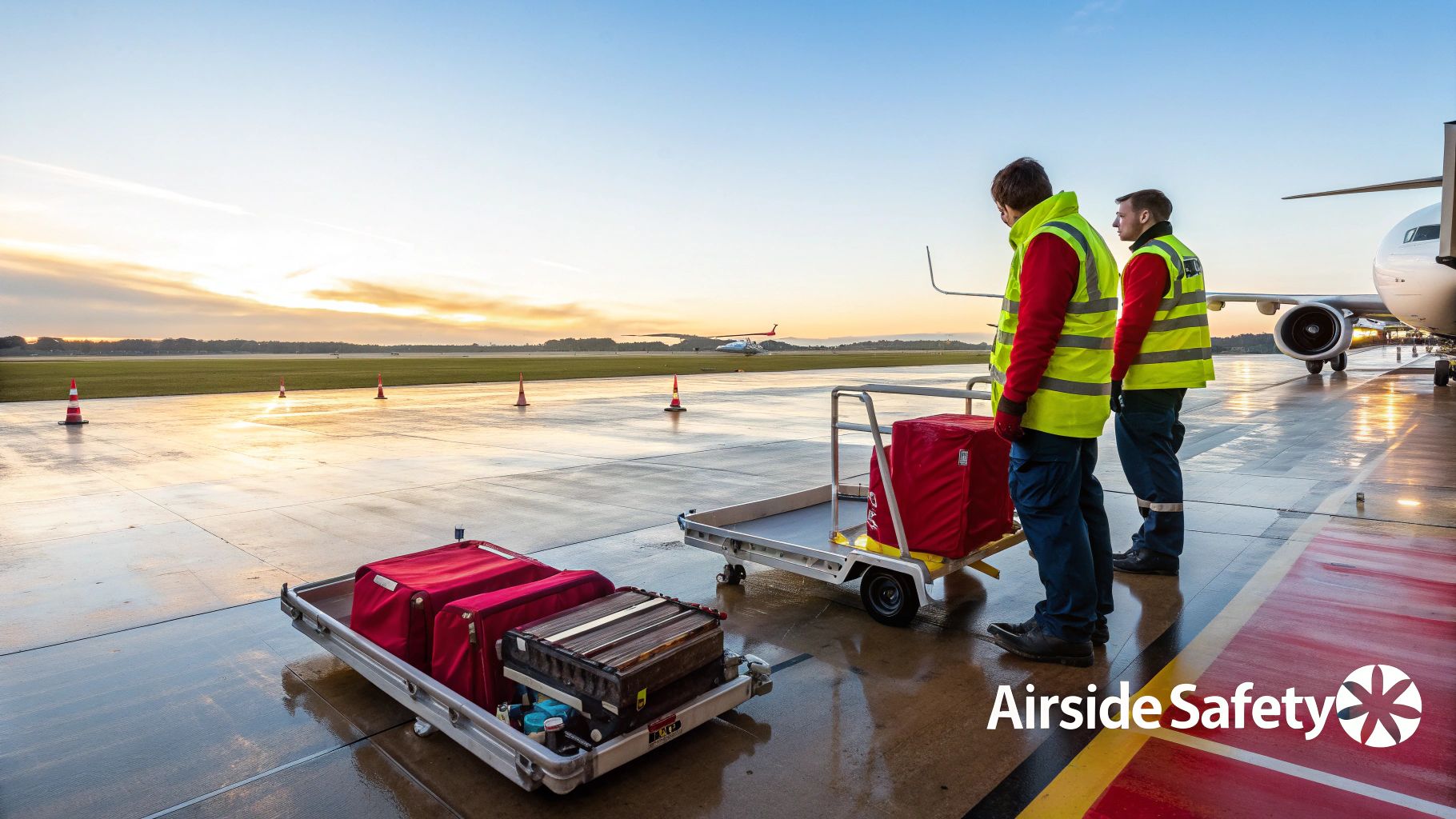
Statistics confirm the danger. Vehicle incidents are a leading cause of work-related traumatic injury fatalities, accounting for a significant portion of all fatal incidents. The machinery operator and driver occupation group, which includes many air transport workers, experiences a fatality rate several times higher than the national average. These figures, highlighted in reports from bodies like Safe Work Australia, underscore the disproportionate risks in transport-related roles. You can review the complete data on the key work health and safety statistics.
The Invisible Threats on the Apron
Beyond the obvious dangers of moving vehicles, ground crews are exposed to powerful, invisible forces that can be just as hazardous. Every running aircraft engine creates two critical hazard zones that demand respect:
- Jet Blast: The exhaust from a jet engine is a high-velocity, high-temperature force, powerful enough to knock a person over, propel unsecured equipment, and cause severe burns.
- Engine Ingestion Zone: The front of a running engine generates a powerful vacuum capable of pulling in people, vehicles, or loose debris from a considerable distance, with catastrophic outcomes.
Strict adherence to marked exclusion zones is non-negotiable for anyone working airside. Additionally, the constant roar of engines presents another insidious danger: noise-induced hearing loss. Without adequate hearing protection, daily exposure gradually causes irreversible damage to a worker's hearing.
Physical Strain and Environmental Hazards
The job is physically demanding. Manual handling of baggage and cargo is a primary cause of musculoskeletal disorders, from chronic back injuries to repetitive strain. Lifting heavy, awkwardly shaped items within confined cargo holds places immense stress on the body.
Slips, trips, and falls are another persistent threat. The apron surface can become treacherous due to rain, ice, or spills of fuel, oil, and de-icing fluids. Proper non-slip footwear and diligent housekeeping are crucial first lines of defence.
Working outdoors exposes crews to the elements. They endure everything from extreme summer heat, with the risk of heatstroke, to freezing winter conditions, which bring the threat of hypothermia and frostbite. An effective safety plan must account for these environmental factors by providing appropriate personal protective equipment (PPE) and implementing sensible work-rest schedules.
The sheer variety of dangers on the tarmac highlights why a deep understanding of these occupational health and safety challenges is so critical. These risks demand a structured, systematic approach to protect the people who keep aircraft flying.
Uncovering Hazards in Maintenance and Cargo Handling
Moving from the fast-paced apron to a maintenance hangar or cargo shed, the safety risks transform but do not diminish. These controlled environments contain specialized hazards that demand rigorous safety protocols to protect the personnel who maintain aircraft and manage freight.
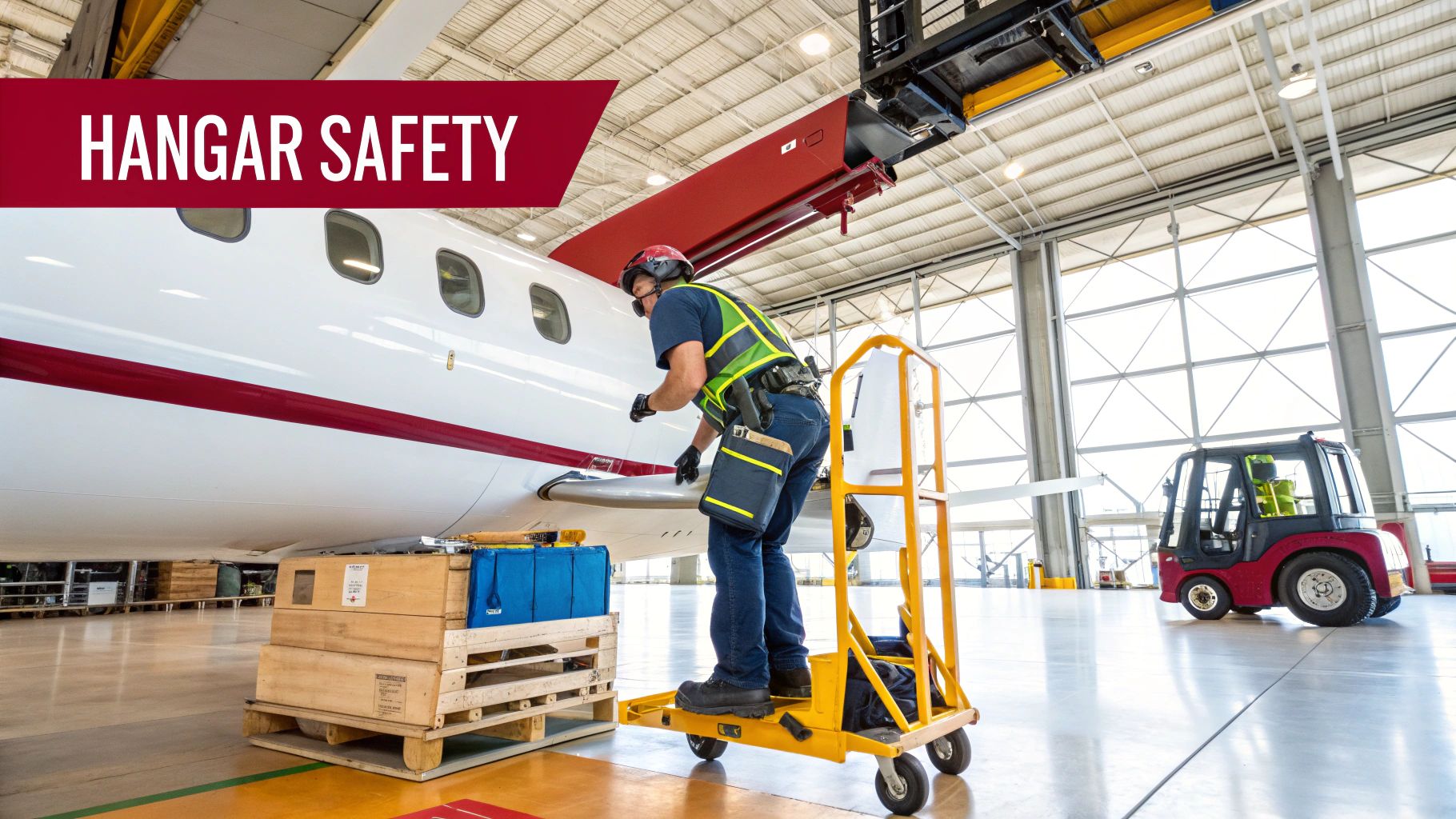
For aircraft maintenance engineers, the hangar presents numerous challenges. One of the most significant threats is chemical exposure. Teams regularly handle a variety of potent substances, including corrosive hydraulic fluids, powerful solvents, and aviation fuels. Without correct handling procedures and personal protective equipment (PPE), skin contact or fume inhalation can lead to serious health issues, from dermatitis to chronic respiratory conditions.
Mechanical and Electrical Dangers in the Hangar
Beyond chemical risks, the sheer size and complexity of an aircraft create numerous physical dangers. Much of the maintenance work involves working at heights, such as on stands to access an engine or on scaffolding around the tail. A single misstep can lead to a life-altering fall, making fall arrest systems and stable work platforms essential.
Aircraft remain powerful machines even when powered down. The risk of crush injuries is ever-present when engineers work near:
- Heavy components like landing gear that could shift unexpectedly.
- Flight control surfaces that might move during system tests.
- High-pressure hydraulic and pneumatic systems that can release with tremendous force if not properly depressurised.
Electrical hazards are also prevalent. Modern aircraft are filled with complex wiring and high-voltage avionics. Lockout/tagout procedures are critical to ensure a system is de-energised before work begins, preventing tragic electrocutions.
Risks Unique to Cargo Operations
In the cargo facility, safety challenges shift to logistics and the physical demands of moving goods. Cargo handlers perform an intensely physical job, putting them at high risk for ergonomic injuries. The constant lifting, pushing, and pulling of heavy, awkward freight can lead to musculoskeletal disorders, particularly affecting the back and shoulders.
The proper management of dangerous goods is arguably the most critical safety function in air cargo. A single undeclared or mislabelled package containing flammable, corrosive, or toxic material can have catastrophic consequences for handlers, the aircraft, and everyone on board.
Heavy machinery, such as forklifts and container loaders, is essential to cargo operations but introduces its own risks. Operating this equipment in confined spaces, like a cargo hold or a busy warehouse, significantly increases the chance of collisions, crush incidents, and accidents involving pedestrians.
There is no substitute for comprehensive training, clear traffic management plans, and a culture of strict adherence to equipment procedures. These hazards are central to any discussion about workplace safety risks in air transport, making a robust safety system indispensable in these high-stakes environments.
Addressing the Invisible Risks for Flight and Cabin Crew
When considering aviation safety, it is easy to focus on the tangible physical dangers of the tarmac or maintenance hangar. However, in the cockpit and cabin, the most significant threats are often invisible. These are the psychosocial workplace safety risks in air transport—the human factors that can subtly undermine the wellbeing of flight and cabin crews.
These risks can be likened to 'mental turbulence'; though unseen, they can seriously disrupt cognitive function, cloud judgment, and gradually erode an individual's resilience. For pilots and cabin staff, these are not abstract concepts but daily realities that require a proactive approach to mental health and fatigue management.

The Pervasive Threat of Fatigue
Fatigue is more than simple tiredness; it is a profound state of weariness that degrades both mental and physical performance. In aviation, it is a silent and relentless threat, fueled by factors inherent to the job.
- Irregular Schedules: Alternating between early starts and late finishes disrupts the body's natural circadian rhythm, making restorative sleep difficult to achieve.
- Long-Haul Flights: Extended periods crossing multiple time zones not only cause tiredness but also lead to jet lag, which directly impairs alertness and decision-making capabilities.
- Cumulative Sleep Debt: A consistent lack of quality sleep accumulates over time, resulting in a chronic state of fatigue that is challenging to overcome without adequate rest.
This is a critical safety issue. A fatigued pilot may have slower reaction times, while a tired cabin crew member might struggle with communication during an emergency. It directly compromises the safety of every flight.
The Growing Burden of Work-Related Stress
Beyond physical exhaustion, the psychological demands of the job are immense. Flight and cabin crews operate in a high-stakes environment where they are responsible for hundreds of lives. This constant pressure, combined with other stressors, creates a significant mental health burden.
Recent statistics paint a stark picture. Mental health conditions now account for a growing percentage of serious workers' compensation claims, with a substantial increase over the past decade. Surveys within the aviation workforce reveal widespread concern about poor mental health, often attributed to excessive workloads and fatigue. You can explore these figures in the full report on key work health and safety statistics.
For cabin crew, managing disruptive or aggressive passengers has become an increasingly common and stressful aspect of their work. These incidents can range from verbal abuse to physical altercations, creating a hostile environment that contributes to anxiety and burnout.
Building Resilience Through Holistic Safety Systems
To effectively address these invisible risks, safety systems must extend beyond physical checks and procedural compliance. A comprehensive Occupational Health and Safety (OHS) framework must include robust support for mental wellbeing. This involves fostering a culture where discussing fatigue or mental health is seen not as a weakness but as a professional responsibility.
A truly holistic system would incorporate key components such as:
- Fatigue Risk Management Systems (FRMS): Moving beyond simple flight hour limits, modern FRMS use data and scientific principles to proactively manage fatigue risks.
- Mental Health Support Programs: Operators must provide confidential and accessible counseling and psychological support services tailored to the unique pressures of the aviation industry.
- De-escalation Training: Equipping cabin crew with the skills to safely manage difficult passenger interactions before they escalate is crucial.
By acknowledging and actively managing these psychosocial hazards, air transport operators can build a more resilient workforce and, ultimately, ensure a safer environment for everyone.
A Closer Look at the Unique Risks in General Aviation
While commercial airlines operate under intense regulatory scrutiny, the general aviation (GA) sector presents a different set of challenges, with a risk profile that is often more varied and unpredictable. This segment includes private planes, flight schools, and small charter operations, and it consistently accounts for a disproportionate number of aviation incidents, creating significant workplace safety risks in air transport.
Unlike the standardized world of major carriers, GA is characterized by its diversity in aircraft types, pilot experience levels, and operational missions. A one-size-fits-all safety plan is ineffective here. This variability necessitates that any business servicing this ecosystem—from maintenance shops to charter companies—must have a firm grasp of the specific hazards involved.
The Overwhelming Impact of Human Factors
Commercial aviation employs multiple layers of safety nets—crew resource management, sophisticated automated systems, and two pilots—all designed to prevent a single mistake from becoming a catastrophe. In general aviation, however, the pilot often flies solo, acting as pilot, navigator, and systems monitor simultaneously. This creates a single point of failure where human factors play a much larger role in flight outcomes.
In many regions, general aviation represents a significant safety challenge. Private pilot operations are involved in a high percentage of all aviation-related fatalities. Research consistently points to human factors, compounded by a lack of regular, practical training for critical emergencies. You can read more about how this specific training gap impacts GA safety.
The Problem of Training Gaps and Fading Skills
A core issue is the gap between legal requirements and actual proficiency. Merely logging the minimum flight hours to maintain a license is often insufficient to stay sharp on skills needed for rare but life-threatening emergencies.
Proficiency is like a muscle—it atrophies without use. A pilot might fly for years without experiencing a real engine failure or a severe aerodynamic stall. Without dedicated, recurrent training, the critical skills required to handle such events diminish over time.
This "skill fade" is a well-documented risk. Emergency response skills are perishable, and in a crisis, a pilot has only seconds to react correctly. Without recent practice, that reaction may be too slow, incorrect, or even worsen the situation.
The Pressure Cooker of Finance and Culture
The GA community also faces unique financial and cultural pressures that can lead to increased risk-taking. For private owners and small operators, the costs of proper maintenance, fuel, and advanced training are substantial burdens. This can result in dangerous decision-making:
- Putting Off Maintenance: Deferring non-critical maintenance to save money may seem minor, but it allows small issues to escalate into major failures.
- "Get-There-Itis": This is the self-imposed pressure to continue a flight despite deteriorating weather or a minor technical issue, often driven by personal or business commitments.
- Normalising Risky Behaviour: In some circles, skipping parts of a pre-flight check or flying in marginal weather is perceived as a sign of experience rather than poor judgment.
For any business supporting the GA sector, these factors underscore why a formal safety system is not just for major airlines. It provides an essential framework for elevating standards, managing the specific risks found in general aviation, and cultivating a genuine safety culture.
Building Your Safety Framework with ISO 45001
Identifying the numerous workplace safety risks in air transport is the first step, but protecting your personnel requires a robust system to manage them. This is where ISO 45001, the international standard for occupational health and safety (OHS), becomes an invaluable tool. It provides a clear, repeatable blueprint for building a proactive safety culture.
ISO 45001 should be viewed not as a restrictive rulebook but as a practical flight plan for safety. It guides your organization through a logical process: systematically identifying hazards, assessing their associated risks, and implementing effective controls. This structured approach ensures that nothing is overlooked in the high-pressure, fast-moving world of aviation.
Translating ISO 45001 Clauses into Action
The standard's strength lies in how its clauses directly address real-world hazards on the tarmac, in the hangar, and in the cabin. It provides a framework for turning safety goals into concrete, daily procedures, integrating safety into the fabric of the job rather than treating it as an afterthought.
For example, Clause 6, "Planning," focuses on proactive risk assessment. This involves methodically analyzing ground vehicle movements on the apron, identifying potential collision points, and then implementing effective controls like designated walkways and strict speed limits. It compels you to think ahead instead of merely reacting to incidents.
Similarly, Clause 8, "Operation," addresses safe work procedures for specific tasks. This is where you would develop detailed protocols for handling de-icing fluids in a maintenance bay, specifying the correct personal protective equipment (PPE), safe storage requirements, and emergency spill response procedures.
The flowchart below illustrates how multiple factors can contribute to a single incident, reinforcing the need for a holistic, system-wide approach.
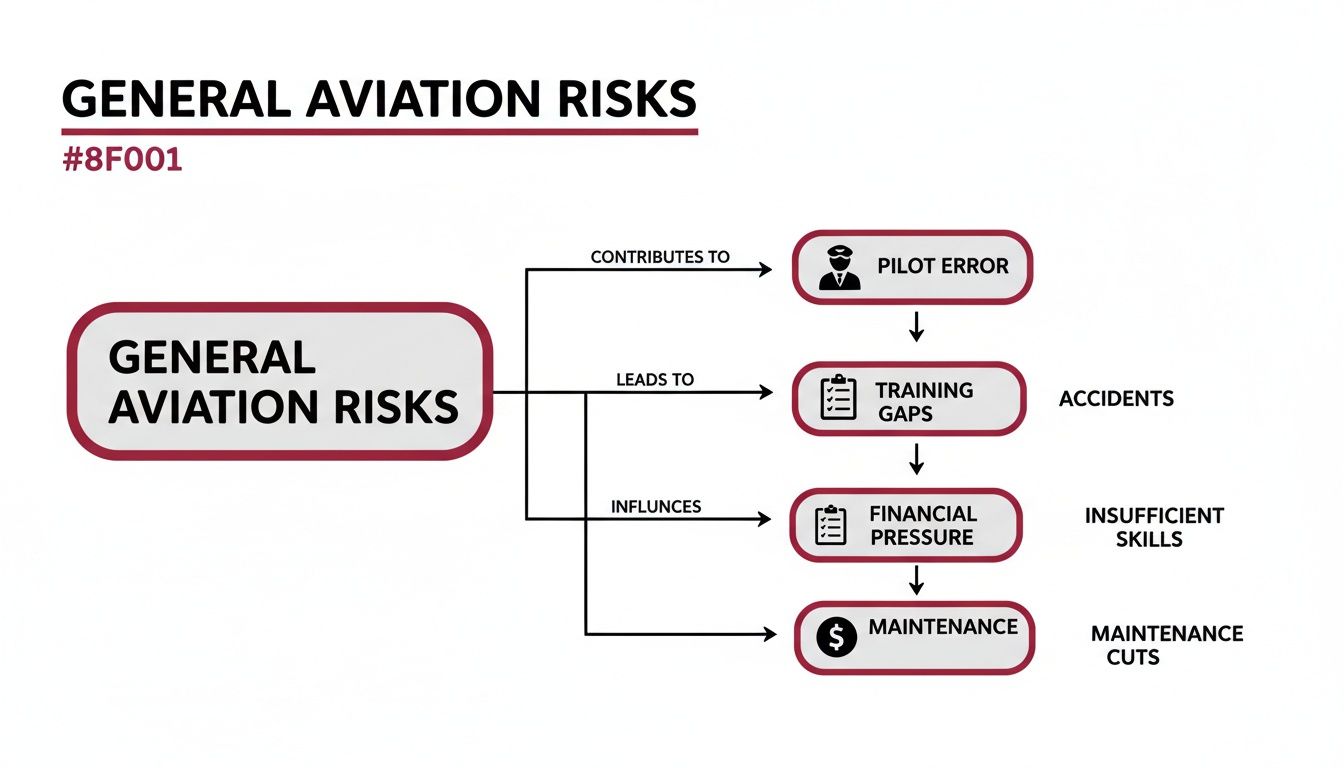
As shown, factors like pilot error, training gaps, and financial pressures are all interconnected. A comprehensive safety system must account for all these elements.
Mapping Air Transport Risks to ISO 45001 Controls
To illustrate this, let's connect common aviation hazards to the specific sections of ISO 45001 designed to control them. This table demonstrates that the standard is a practical tool for managing real workplace safety risks in air transport.
| Air Transport Hazard | Relevant ISO 45001 Clause | Example Control Measure |
|---|---|---|
| Ground Vehicle Collisions | Clause 8.1.2: Eliminating hazards and reducing OH&S risks | Implement a documented traffic management plan with clear speed limits, vehicle exclusion zones, and mandatory high-visibility clothing for all airside staff. |
| Manual Handling Injuries | Clause 6.1.2: Hazard identification and assessment | Conduct ergonomic assessments of baggage handling tasks and introduce mechanical lifting aids to reduce physical strain on workers. |
| Crew Fatigue | Clause 7.3: Awareness | Develop and implement a Fatigue Risk Management System (FRMS) that includes training on identifying fatigue symptoms and utilizes science-based rostering principles. |
| Chemical Exposure | Clause 8.2: Emergency preparedness and response | Create a comprehensive chemical register, ensure all Safety Data Sheets (SDS) are easily accessible, provide specific spill response training, and install emergency eyewash stations. |
By using this structured framework, safety management becomes a deliberate, measurable, and continuously improving process. You transition from reacting to problems to actively preventing them.
Implementing such a system not only protects your team but also builds operational trust and provides the documented proof of safety that major clients and regulators demand. For businesses ready to take this step, exploring the path to ISO 45001 certification is the next logical move toward building a safer and more resilient organization.
Common Questions About Aviation Safety
As we conclude this examination of managing workplace safety risks in air transport, let's address some frequently asked questions from business owners and safety managers. Clear answers can be the key to turning theory into effective action.
Is ISO 45001 Really Feasible for a Small Operation?
Absolutely. There is a common misconception that a sophisticated safety system like ISO 45001 is only for large organizations like major airlines. However, the standard is a scalable framework, not a rigid, one-size-fits-all solution.
The key is to adapt its principles to fit your specific operational needs, whether you are a small charter company or a specialized maintenance facility. You do not need to replicate a large corporation's extensive documentation. For a smaller business, this might involve simpler records and more direct communication, but the fundamental goal of identifying and mitigating hazards remains the same. The approach should be proportional and intelligent, not bureaucratic.
What Are the Real Business Benefits Beyond Just Ticking a Box?
While meeting legal obligations is essential, the true value of a certified safety system extends much further. It can be one of your most effective business development tools.
- Winning More Tenders: Government and large corporate contracts increasingly specify ISO 45001 certification as a prerequisite. Without it, you may not even be eligible to bid.
- Driving Down Costs: A strong safety culture leads to fewer incidents, which translates directly into lower workers' compensation premiums, less equipment damage, and minimal operational downtime.
- Building a Stronger Reputation: A public commitment to safety builds trust with clients, employees, and the industry. It signals that you are a professional and reliable operator.
Ultimately, a strong safety record is not just about compliance; it's a powerful competitive advantage that demonstrates a level of professionalism that sets your business apart.
What’s the First Practical Step to Get Certified?
The first step is often the most straightforward: make the decision to pursue certification and then seek expert guidance. Attempting it alone can be a confusing and frustrating process. A consultation with a specialist can provide a clear understanding of your current position and the path to certification.
The process typically begins with a gap analysis, which compares your existing practices against the standard's requirements. This yields a clear, actionable roadmap, highlighting exactly what needs to be improved before an audit. It eliminates guesswork and breaks a significant goal into manageable steps.
To learn more about implementing a safety management system tailored to your operations, visit us at https://iso45001.net.au.
Recent Comments