
TL;DR: This guide details the top 5 health and safety risks in construction: falls from height, struck-by incidents, electrocution, musculoskeletal disorders, and exposure to hazardous substances. We provide actionable controls, ISO 45001 alignment, audit checklists, and tender compliance insights to help Australian businesses improve worksite safety.
The Australian construction industry is a powerhouse of economic growth, but it remains one of the most hazardous sectors to work in. While every project has unique challenges, understanding the top 5 health and safety risks in construction is the first, most critical step towards building a robust safety culture that protects your team, ensures compliance, and strengthens your business's reputation. Addressing these threats consistently helps prevent the most serious injuries and fatalities.
This in-depth guide provides a comprehensive breakdown of these key construction hazards, moving beyond generic advice to offer practical, actionable control measures. We focus on providing the specific details that operations managers and WHS professionals need to implement real-world change on site. By mastering these critical areas, you not only safeguard your workforce but also gain a significant competitive advantage in government and private-sector tenders where safety performance is a key evaluation criterion.
For each of the five major hazards covered, you will find:
- A concise description of the risk and its common causes.
- Practical, hierarchical controls and safe work procedures.
- Specific guidance on how an ISO 45001 framework helps manage the risk.
- Actionable audit checklist items for internal review.
- The direct implications for tender and contract compliance.
This article is designed for Australian construction SMEs, contractors, and safety managers who need to move beyond simple compliance and build a truly resilient safety management system that prevents incidents before they happen.
1. Falls from Height
Falls from height remain the single largest cause of death and serious injury in the Australian construction sector. This pervasive risk is responsible for approximately 35% of all construction fatalities, making its management a top priority for any responsible organisation. The danger is not confined to multi-storey buildings; a fall from any height can result in life-altering injuries. This risk includes falls from scaffolding, ladders, roofs, mobile plant, elevated work platforms (EWPs), and through unprotected penetrations or open edges.
The severity of this risk is often amplified by underlying factors such as inadequate fall protection systems, poor site housekeeping leading to trip hazards near edges, adverse weather conditions like high winds or rain, and human factors such as fatigue or a lack of specific training. Understanding and mitigating these contributing elements is fundamental to creating a safe work environment and is a core expectation within safety management systems.
Common Causes and Scenarios
On a typical construction site, the potential for a fall from height is constant. Some of the most common scenarios include:
- Unprotected Edges: Workers performing tasks near the edge of a floor, roof, or excavation without adequate guardrails or fall arrest systems.
- Scaffolding Issues: Incorrectly erected scaffolding, missing components like handrails or toe boards, or using scaffolding that has not been inspected and tagged as safe for use.
- Ladder Misuse: Using the wrong type of ladder for the task, over-reaching, setting it up on unstable ground, or using a damaged ladder.
- Roof Work: Working on brittle or unstable roof surfaces without proper platforms or harnesses, especially during wet or windy conditions.
- Elevated Work Platforms (EWPs):: Operating an EWP on uneven ground, exceeding its load capacity, or failing to wear a harness and lanyard where required.
A leading civil contractor successfully achieved zero fall-related injuries over a two-year project by enforcing a mandatory stop-work protocol for all work at height during adverse weather, demonstrating the power of clear, non-negotiable safety rules.
Practical Controls and Safe Work Procedures
Effectively managing the risk of falls requires a systematic approach based on the hierarchy of controls. This framework prioritises the most effective measures to ensure worker safety.
- Elimination: The most effective control is to eliminate the need to work at height altogether. This can be achieved through prefabrication of components at ground level, which are then lifted into place.
- Substitution: If elimination is not possible, substitute the hazard with a safer alternative. For example, use a scaffold or EWP instead of a ladder for tasks requiring longer duration or more stability.
- Engineering Controls: These are physical changes to the workplace. Installing permanent guardrails, safety mesh, or perimeter fencing are prime examples. To effectively combat falls from height, it is crucial to understand and implement stringent balustrade height regulations, as these are designed specifically for preventing falls.
- Administrative Controls: These are the rules and procedures you implement. Examples include developing Safe Work Method Statements (SWMS) for all high-risk construction work, conducting daily toolbox talks on fall hazards, implementing permit-to-work systems for height access, and ensuring competency-based training is provided.
- Personal Protective Equipment (PPE):: This is the last line of defence. PPE includes fall arrest systems like harnesses, lanyards, and anchor points. It's critical that all PPE is regularly inspected, maintained, and that workers are trained in its correct use, fit, and limitations. A documented rescue plan must also be in place before any work using a fall arrest system commences.
How ISO 45001 Helps Manage Fall Risks
ISO 45001 provides a robust framework for systematically managing fall-related hazards. Under this standard, organisations are required to identify hazards, assess risks, and implement effective controls. Clauses related to hazard identification (6.1.2), operational planning and control (8.1), and emergency preparedness (8.2) are directly applicable.
Implementing an ISO 45001-compliant Occupational Health and Safety Management System ensures that fall prevention is not an afterthought but an integrated part of your operations. It drives a culture of continuous improvement, where near-misses related to falls are reported, investigated, and used as learning opportunities to prevent future incidents.
Audit Checklist and Tender Compliance
When bidding for contracts, particularly for government or tier-one projects, a certified OHS management system is often a prerequisite. Demonstrating robust management of high-consequence risks like falls is critical.
An internal or external auditor will look for evidence of:
- A comprehensive risk register that identifies specific fall hazards on site.
- Completed risk assessments and SWMS for all work-at-height activities.
- Training records proving worker competency for height work and EWP operation.
- Inspection and maintenance logs for all fall protection equipment, scaffolding, and EWPs.
- Documented emergency and rescue plans specific to fall-related incidents.
- Minutes from safety meetings where fall hazards were discussed.
2. Struck-By Incidents and Moving Equipment
Struck-by incidents involving mobile plant, vehicles, and falling objects represent the second most frequent cause of fatalities in the Australian construction sector, accounting for approximately 20-25% of all deaths. These devastating events occur when workers are hit by moving equipment like cranes and excavators, site vehicles, or objects dislodged from heights or equipment. This pervasive risk highlights a critical challenge on any dynamic work site: managing the interaction between people and powerful machinery.
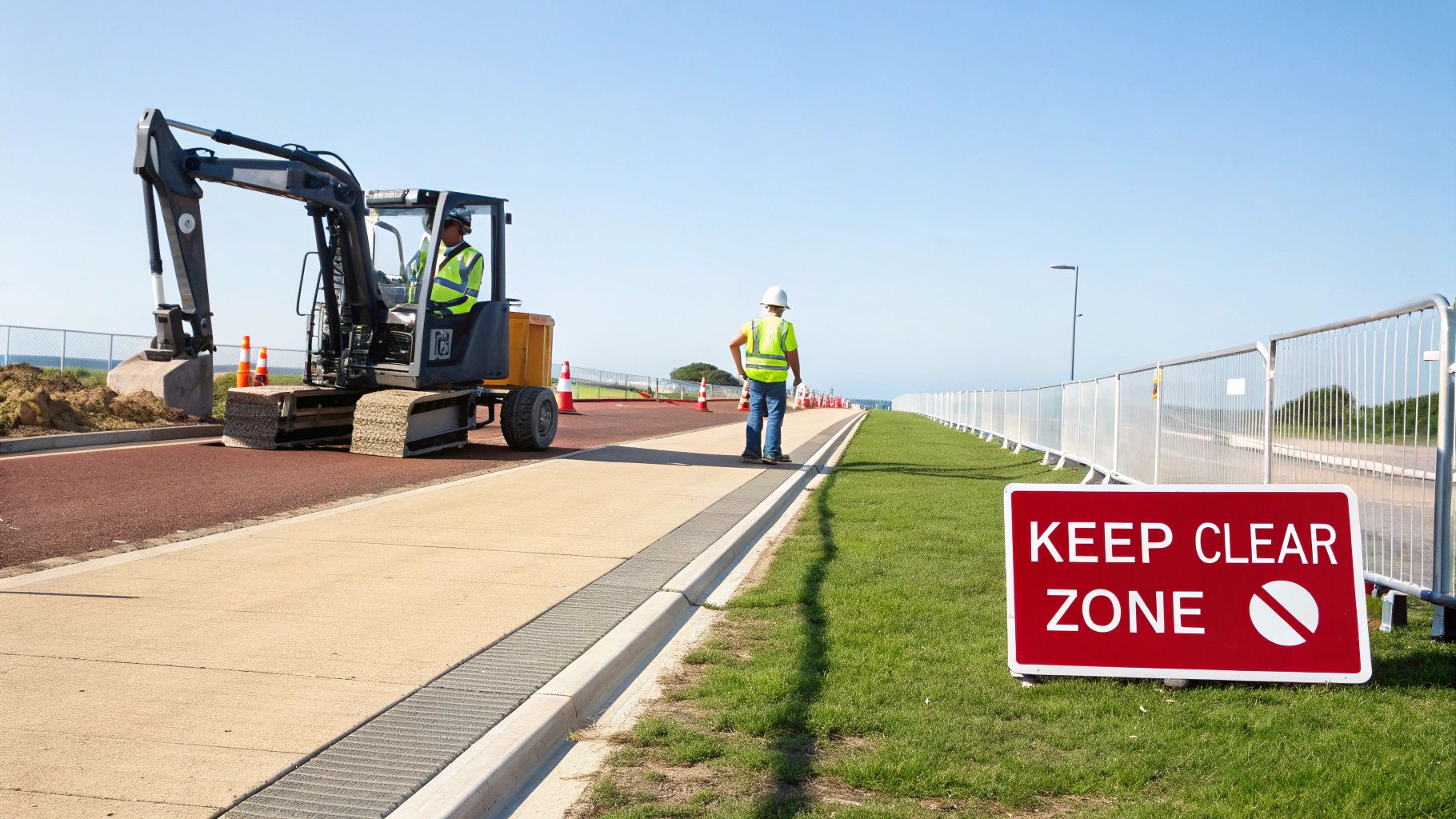
The likelihood of a struck-by incident is significantly increased by common site conditions. These include inadequate separation of pedestrians and plant, large blind spots on heavy machinery, poor site traffic management, ineffective communication between operators and ground crew, and operator fatigue. Addressing these underlying factors is essential for preventing catastrophic accidents and is a fundamental component of any effective safety management system. The dynamic and ever-changing nature of construction sites means these risks must be continually reassessed.
Common Causes and Scenarios
On any given construction project, the risk of a worker being struck by moving plant or an object is a daily reality. Common scenarios that lead to these incidents include:
- Poor Site Layout: Pedestrian walkways that intersect with vehicle routes or are not clearly demarcated, forcing workers into the path of moving equipment.
- Blind Spots: Operators of excavators, loaders, or trucks reversing or slewing without being able to see a worker who has entered their operational blind spot.
- Inadequate Exclusion Zones: Workers entering the operational area around a crane, piling rig, or excavator without authorisation or effective physical barriers in place.
- Falling Objects: Tools, materials, or debris falling from scaffolding or being dislodged by equipment and striking workers below.
- Vehicle Movement: Delivery trucks, concrete agitators, or light vehicles navigating congested sites without a dedicated traffic controller or a clear traffic management plan.
A Brisbane hospital construction project introduced proximity detection systems on all mobile plant, resulting in zero struck-by incidents across the two-year project. This shows how leveraging technology can engineer out human error.
Practical Controls and Safe Work Procedures
Managing the risks associated with moving equipment requires a robust, multi-layered strategy guided by the hierarchy of controls. This ensures the most effective measures are prioritised.
- Elimination: The most effective control is to design the workplace to remove the interaction between people and plant. This can involve using remote-controlled equipment or designing traffic flow to completely segregate pedestrian and vehicle routes.
- Substitution: Where elimination isn't feasible, substitute hazardous practices with safer ones. For example, using a telehandler instead of a crane and dogman for smaller lifts can reduce the number of personnel exposed in the lift zone.
- Engineering Controls: These involve physical modifications to the site or equipment. Examples include installing physical barriers to create exclusion zones, fitting mobile plant with reversing cameras and proximity sensors, and using overhead protective structures on walkways.
- Administrative Controls: These are the procedures and rules that govern how work is done. Key controls include developing and enforcing a site-specific Traffic Management Plan, mandating high-visibility clothing, using a dedicated spotter for reversing plant, implementing lockout-tagout procedures for equipment maintenance, and conducting regular toolbox talks on vehicle and pedestrian safety.
- Personal Protective Equipment (PPE):: As the final line of defence, PPE includes hard hats, steel-capped boots, and high-visibility vests. While essential, PPE does not prevent an incident from occurring; it only reduces the severity of the injury.
How ISO 45001 Helps Manage Struck-By Risks
ISO 45001 provides a structured framework to proactively manage the complex risks of people-plant interaction. The standard requires a systematic approach to identifying hazards, assessing risks, and implementing controls. Clauses such as Hazard identification (6.1.2), Control of outsourced processes (8.1.4) for contractors, and Operational planning and control (8.1) are directly relevant.
By implementing an ISO 45001-certified Occupational Health and Safety Management System, an organisation embeds traffic and plant management into its core processes. It promotes a culture of proactive risk management, ensuring that near-misses involving vehicles or plant are reported, thoroughly investigated, and used to strengthen safety procedures, preventing future incidents before they happen.
Audit Checklist and Tender Compliance
For tenders, especially on major infrastructure or government projects, a certified management system demonstrating control over high-consequence risks like struck-by incidents is non-negotiable. It signals to clients that you operate with a high degree of safety maturity.
An auditor will seek verifiable evidence of:
- A current, site-specific Traffic Management Plan that is communicated and understood by all personnel.
- Risk assessments and SWMS for all high-risk activities involving mobile plant.
- Records of operator competency and licences (e.g., High Risk Work Licences).
- Pre-start checklists and maintenance logs for all vehicles and mobile plant.
- Evidence of implemented exclusion zones (e.g., photos, site plans, inspection records).
- Toolbox talk records where traffic management and struck-by hazards were discussed.
3. Electrocution and Electrical Hazards
Representing a potent and often hidden danger, electrical hazards are responsible for approximately 10-15% of all construction fatalities in Australia. Beyond fatalities, these risks are a significant cause of serious, life-altering injuries, including severe burns, neurological damage, and secondary injuries from falls after a shock. The dynamic and often temporary nature of a construction site exacerbates these dangers, with risks stemming from contact with live circuits, damaged equipment, overhead power lines, and the presence of moisture.
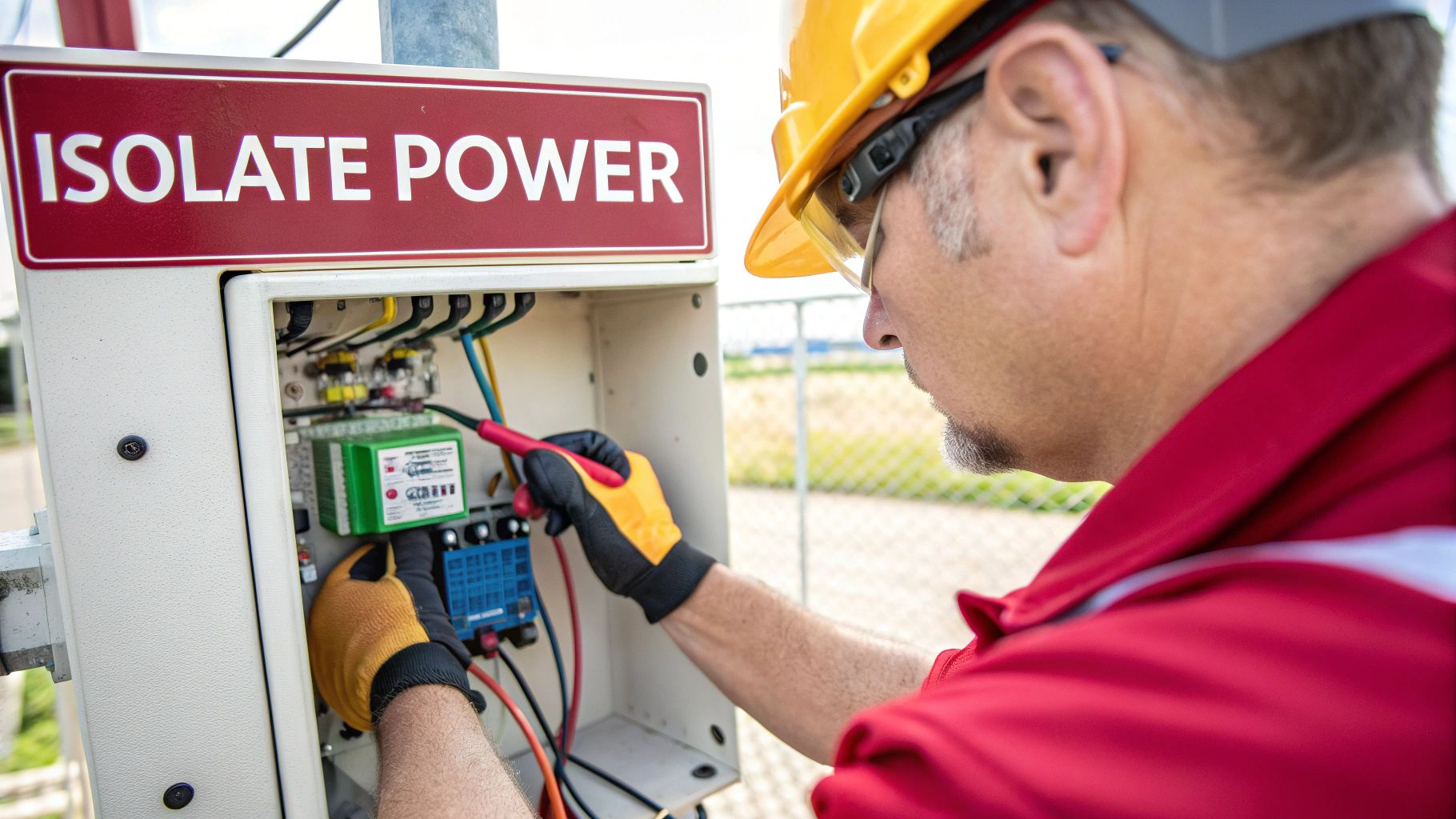
The unique environment of a construction site, with its temporary installations, constant equipment changes, and exposure to the elements, creates a high-risk electrical landscape. Managing these risks involves more than just common sense; it requires a systematic approach to identifying, isolating, and controlling electrical energy sources. Given that workers with varying levels of electrical competency are present, clear protocols and stringent controls are non-negotiable for preventing incidents.
Common Causes and Scenarios
On any construction site, the potential for a catastrophic electrical incident is ever-present. Some of the most common scenarios include:
- Overhead Power Lines: Mobile plant, such as cranes or EWPs, making contact with live overhead power lines is a leading cause of fatalities.
- Damaged Equipment: Using power tools, extension leads, or other equipment with frayed cords, broken casings, or missing insulation.
- Contact with Live Parts: Workers accidentally touching energised components in switchboards, temporary wiring, or faulty equipment that has not been properly isolated.
- Improper Grounding: Electrical systems or tools that are not correctly grounded can cause parts to become live in the event of a fault, creating a severe shock hazard.
- Wet Conditions: Using electrical equipment in wet or damp environments without appropriate controls, such as residual-current devices (RCDs), significantly increases the risk of electrocution.
A major Melbourne construction firm successfully eliminated all overhead powerline contact incidents by mandating pre-construction surveys, establishing clearly marked exclusion zones, and conducting daily pre-start briefings to reinforce powerline locations with all mobile plant operators.
Practical Controls and Safe Work Procedures
Managing electrical risks effectively demands a structured approach based on the hierarchy of controls, focusing on isolating workers from electrical energy.
- Elimination: The most effective control is to de-energise electrical equipment before work begins. This includes shutting off power and ensuring it cannot be accidentally turned back on. Where possible, using non-powered tools (e.g., hand tools) or battery-operated tools can eliminate the hazard of mains power.
- Substitution: Substitute hazardous equipment with a safer alternative. For example, use low-voltage equipment (e.g., 12V or 24V) in high-risk areas like confined spaces or wet environments instead of 240V equipment.
- Engineering Controls: These are physical controls that isolate people from the hazard. This includes installing RCDs on all circuits, using properly insulated tools, ensuring electrical equipment has appropriate casings, and using insulated barriers or mats.
- Administrative Controls: These are the procedures and rules that ensure safe work practices. Key examples include implementing a stringent lockout/tagout (LOTO) procedure for isolating equipment, developing Safe Work Method Statements (SWMS) for electrical work, and establishing a Permit to Work system for high-voltage tasks. Regular inspection and testing of portable appliances (PAT) is a critical administrative control.
- Personal Protective Equipment (PPE):: This is the final barrier of protection. PPE includes electrically insulated gloves, boots, and face shields. It should only be used in conjunction with higher-level controls and workers must be trained in its proper use, inspection, and maintenance.
How ISO 45001 Helps Manage Electrical Risks
ISO 45001 provides a powerful framework for systematically managing the high-consequence risk of electrocution. The standard requires organisations to proactively identify electrical hazards (Clause 6.1.2), implement robust operational controls (Clause 8.1), and ensure competency and training for workers (Clause 7.2).
By implementing an ISO 45001-compliant Occupational Health and Safety Management System, a company embeds electrical safety into its core processes. It mandates that procedures like lockout/tagout and equipment testing are not just followed, but are also documented, reviewed, and continuously improved. It fosters a safety culture where reporting a damaged extension lead is seen as a crucial preventative action, not an inconvenience.
Audit Checklist and Tender Compliance
For construction tenders, demonstrating proactive management of electrical hazards is a key differentiator. A certified OHS management system provides this assurance.
An auditor will seek verifiable evidence of:
- A risk register that explicitly identifies electrical hazards, including overhead/underground services and temporary wiring.
- Safe Work Method Statements (SWMS) and permits for all high-risk electrical work.
- A comprehensive register and records for the regular inspection and testing of all portable electrical appliances (test and tag).
- Documented lockout/tagout (LOTO) procedures and training records for affected workers.
- Proof that only licenced electricians perform prescribed electrical work.
- Records of site inductions that cover specific electrical hazards, including the location of power lines and main isolation points.
4. Musculoskeletal Disorders (MSDs) and Overexertion Injuries
Musculoskeletal disorders (MSDs) are the most common non-fatal injuries in the Australian construction industry, accounting for an estimated 30-40% of all serious workers' compensation claims. Unlike acute incidents like falls, MSDs often develop over time due to the cumulative physical stress of construction work. These disorders include a wide range of conditions like back injuries, sprains, strains, and repetitive strain injuries (RSI) caused by manual handling, awkward postures, and repetitive tasks.
The gradual onset of these injuries means they are frequently underreported until they become chronic and debilitating, severely impacting a worker's quality of life and productivity. The physical demands of bricklaying, concreting, framing, and general labour put constant strain on the body. Mitigating these risks is not just about preventing a single incident but about designing a sustainable work system that protects the long-term health of the workforce, making it a critical focus for any effective safety management system.
Common Causes and Scenarios
The physical nature of construction work presents numerous scenarios that can lead to MSDs. Some of the most prevalent causes include:
- Hazardous Manual Tasks: Lifting, carrying, or moving heavy or awkward materials like bags of cement, timber frames, or plasterboard sheets without mechanical aids or proper technique.
- Repetitive Motions: Performing the same action repeatedly for long periods, such as swinging a hammer, tying rebar, or using a trowel, leading to inflammation and strain on joints and soft tissues.
- Awkward or Sustained Postures: Working in cramped spaces, kneeling for extended periods, or constantly working with arms above shoulder height can place excessive stress on specific body parts.
- Vibration: Prolonged use of power tools like jackhammers, grinders, and compactors can lead to Hand-Arm Vibration Syndrome (HAVS), a painful and disabling condition affecting nerves, blood vessels, and joints.
- Forceful Exertion: Pushing or pulling heavy loads, such as when operating wheelbarrows on uneven terrain or tensioning cables.
A Queensland-based contractor achieved a 50% reduction in MSD-related incidents by implementing a program of comprehensive ergonomic hazard assessments. They modified high-risk tasks and reinforced safe work techniques through monthly toolbox talks, proving that proactive ergonomic management yields significant results.
Practical Controls and Safe Work Procedures
Managing MSD risks requires a proactive and ergonomic-focused approach, applying the hierarchy of controls to minimise physical strain on workers.
- Elimination: The most effective strategy is to design out the manual task altogether. This can be achieved by using prefabricated materials that require less on-site handling or utilising delivery methods that place materials directly at the point of use.
- Substitution: Replace hazardous manual tasks with safer alternatives. For example, substitute manual mixing of concrete with ready-mix deliveries or use lighter-weight building materials where possible.
- Engineering Controls: These are physical modifications to the work environment. Providing mechanical aids like cranes, hoists, dollies, and vacuum lifters is crucial. Redesigning workstations to be at a comfortable height and providing anti-vibration tools are also key engineering solutions.
- Administrative Controls: These are the procedures and systems that change the way people work. Examples include implementing job rotation to vary tasks and muscle group usage, ensuring mandatory rest breaks for physically demanding jobs, and providing comprehensive training on correct manual handling techniques. Developing Safe Work Method Statements (SWMS) for high-risk manual tasks is a fundamental administrative control.
- Personal Protective Equipment (PPE):: While less effective for MSDs, PPE can play a role. This includes items like anti-vibration gloves or knee pads. However, PPE should never be relied upon as the primary control for manual handling risks.
How ISO 45001 Helps Manage MSD Risks
ISO 45001 provides a structured framework to proactively manage ergonomic hazards that lead to MSDs. The standard's emphasis on worker consultation (Clause 5.4) is vital, as workers are best placed to identify tasks that cause physical strain. Clause 6.1.2 (Hazard identification) requires organisations to systematically identify manual handling risks, while Clause 8.1.2 (Eliminating hazards and reducing OH&S risks) drives the implementation of the hierarchy of controls.
By integrating an ISO 45001-compliant management system, a construction company embeds ergonomic principles into its operational planning. This ensures that MSD prevention moves beyond a simple "lift with your knees" training session to a holistic approach involving task design, equipment procurement, and continuous monitoring of worker health and feedback.
Audit Checklist and Tender Compliance
For tender submissions, demonstrating a systematic approach to managing the industry's most common injury type is a significant advantage. Clients want to see that you are protecting your workforce's long-term health.
An auditor will look for objective evidence of:
- A risk register that specifically identifies hazardous manual tasks and ergonomic risks.
- Completed ergonomic risk assessments for high-risk activities (e.g., bricklaying, concreting).
- Records of worker training in safe manual handling techniques.
- Maintenance logs and usage instructions for mechanical handling aids.
- Evidence of job rotation schedules or modified work plans to reduce repetitive strain.
- Records of consultation with workers regarding physically demanding tasks and potential solutions.
5. Hazardous Substances and Environmental Exposures
Exposure to hazardous substances represents a significant, often insidious, threat in the construction industry, leading to serious occupational diseases. Unlike acute injuries from falls or mobile plant, the damage from chemical and dust exposure is often cumulative and may not manifest for years. This category includes risks from asbestos in demolition, silica dust from cutting concrete or stone, lead in paint removal, and various solvents, adhesives, and chemicals used daily. These hazards are particularly dangerous because their delayed health effects, such as silicosis, asbestos-related diseases, and cancer, can lead to a severe underestimation of the risk on site.
Managing these invisible threats is a cornerstone of a mature safety culture and a key differentiator in demonstrating due diligence. The long-term health of the workforce depends on proactive identification, robust control measures, and continuous monitoring of exposure levels. For any organisation aiming for best practice, a systematic approach to chemical and dust management is not optional; it is a fundamental responsibility.
Common Causes and Scenarios
On construction projects, workers can encounter a wide array of hazardous substances. Understanding the scenarios where exposure occurs is the first step toward effective control.
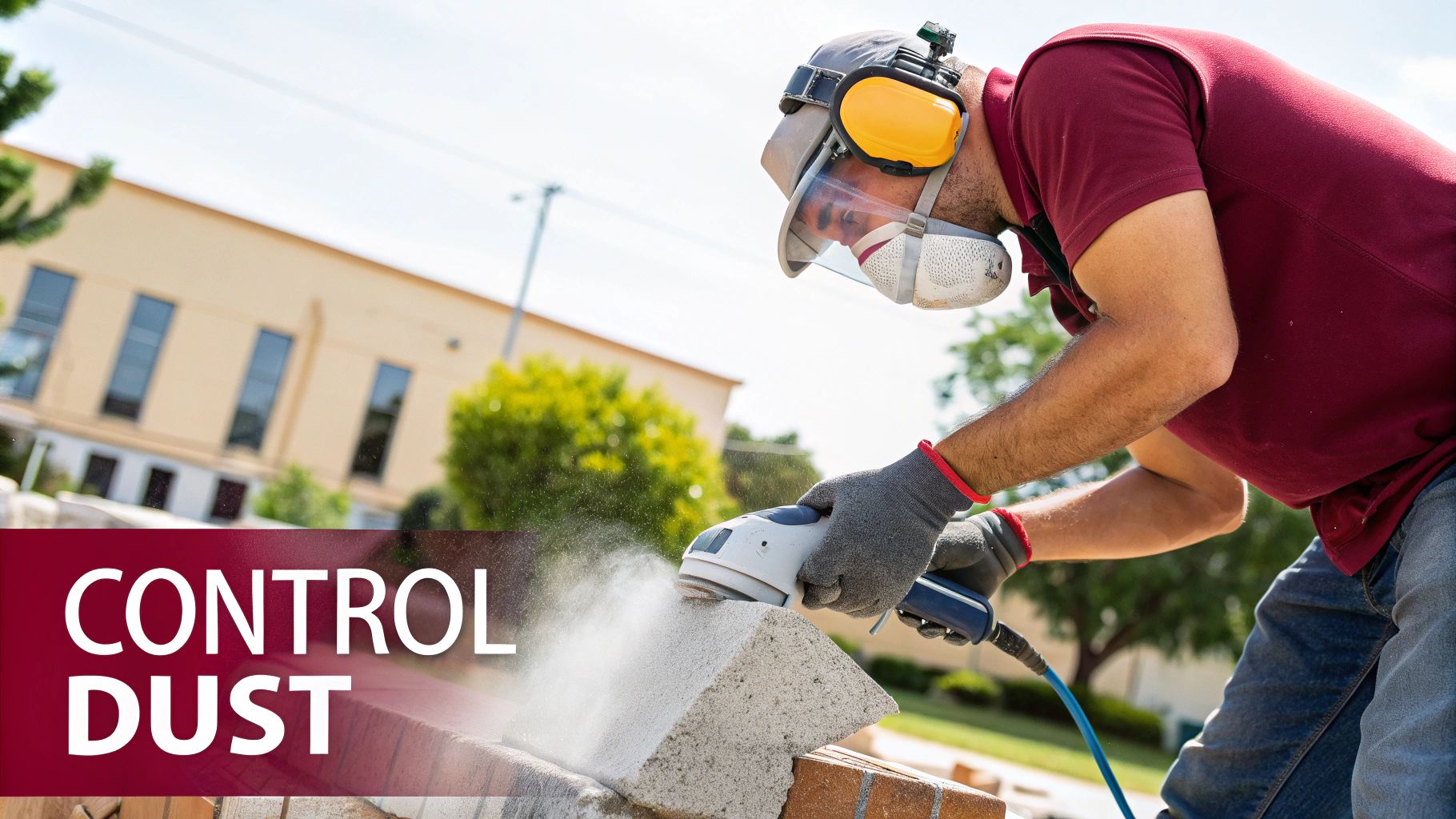
- Silica Dust Exposure: Cutting, grinding, drilling, or polishing concrete, bricks, tiles, or stone without adequate dust suppression or extraction, releasing respirable crystalline silica (RCS).
- Asbestos Disturbance: Demolition or refurbishment of older buildings (pre-2003) without a thorough asbestos survey, leading to the accidental disturbance of asbestos-containing materials (ACMs).
- Lead-Based Paint Removal: Sanding, scraping, or heat-gunning surfaces coated with old lead-based paint, creating lead dust and fumes that can be inhaled or ingested.
- Chemical Handling: Improper use of solvents, adhesives, epoxies, or cleaning agents without adequate ventilation or the correct personal protective equipment (PPE).
- Welding Fumes: Performing welding tasks in poorly ventilated areas, leading to inhalation of toxic metal fumes and gases.
A large construction company successfully reduced silica dust exposure by 90% across its sites by implementing a mandatory policy for wet-cutting methods and the use of on-tool local exhaust ventilation for all grinding and cutting operations. This engineering-first approach proved far more effective than relying solely on respiratory protection.
Practical Controls and Safe Work Procedures
Managing hazardous substances effectively requires strict adherence to the hierarchy of controls, focusing on eliminating or minimising exposure at the source.
- Elimination/Substitution: The most effective control is to remove the hazard. This includes using non-asbestos building products, low-silica concrete alternatives, or non-lead-based materials wherever feasible. Specify safer, low-VOC (Volatile Organic Compound) paints and adhesives during the design phase.
- Engineering Controls: These are physical modifications to the work environment. Examples include using water suppression (wet cutting) to dampen dust, implementing local exhaust ventilation (LEV) systems on tools, or enclosing a process to contain contaminants.
- Administrative Controls: These are the procedures and rules that govern work practices. Key controls include developing a site-specific Hazardous Substance Management Plan, ensuring Safety Data Sheets (SDS) are available and understood for all chemicals, and implementing strict work zones and decontamination procedures for asbestos or lead removal.
- Personal Protective Equipment (PPE):: PPE is the last line of defence and must be used in conjunction with higher-order controls. This includes providing task-specific respiratory protection (e.g., P2 or P3 respirators), ensuring they are properly fit-tested, and supplying chemical-resistant gloves, eye protection, and coveralls. Training on the correct use, storage, and maintenance of PPE is critical.
How ISO 45001 Helps Manage Exposure Risks
ISO 45001 provides a structured framework for managing the complex risks associated with hazardous substances. It compels an organisation to move beyond simple compliance and adopt a proactive, risk-based approach. The standard's requirements for hazard identification (Clause 6.1.2) and operational planning (Clause 8.1) are central to this process.
By implementing an ISO 45001-compliant system, a company must systematically identify all potential chemical and dust hazards, assess worker exposure risks, and implement and verify the effectiveness of controls. It also drives requirements for health surveillance (monitoring) for workers in high-exposure roles and ensures processes are in place to manage changes, such as the introduction of a new chemical to the site.
Audit Checklist and Tender Compliance
When bidding for major projects, demonstrating a robust system for managing hazardous materials is essential. Clients and principal contractors need assurance that you can prevent long-term health impacts and environmental contamination.
An auditor will seek evidence of:
- A comprehensive hazardous substance register that is regularly updated. An effective management system relies on a detailed understanding of every potential hazard, which is a key component you can learn more about in our guide to what is a risk register.
- Readily accessible and current Safety Data Sheets (SDS) for all chemicals on site.
- Records of pre-construction asbestos and hazardous materials surveys.
- Safe Work Method Statements (SWMS) for high-risk activities like asbestos removal, lead paint abatement, and concrete cutting.
- Records of workplace exposure monitoring (e.g., air monitoring for dust or fumes).
- Training and competency records for workers handling specific substances.
- Evidence of health surveillance programs for at-risk employees.
- PPE issue records and documentation of respirator fit-testing.
Top 5 Construction Safety Risks Comparison
| Hazard | Implementation complexity | Resource requirements | Expected outcomes | Ideal use cases | Key advantages |
|---|---|---|---|---|---|
| Falls from Height | High — requires planning, fall-protection systems, rescue plans | Guardrails, harnesses, platforms, training, inspections | Large reduction in fatalities/serious injuries when controls applied | Roofing, scaffolding, ladder work, elevated platforms | Proven control measures, high prevention ROI, clear regulations |
| Struck-By Incidents & Moving Equipment | Medium–High — site layout, traffic and communications planning | Physical barriers, traffic management, proximity tech, spotters, operator training | Marked decrease in struck‑by incidents; improved site flow and safety | Congested sites, heavy plant operations, multi‑contractor worksites | Effective separation strategies, tech solutions, operator competency standards |
| Electrocution & Electrical Hazards | Medium — specialist controls, permits, lockout/tagout | Licensed electricians, RCDs/isolation, PAT testers, inspection regimes | Reduced electrocution/arc‑flash incidents and regulatory compliance | Temporary power setups, work near overhead/underground lines, electrical installs | Clear competency/licensing, effective engineering controls, cost‑effective testing |
| Musculoskeletal Disorders (MSDs) & Overexertion | Medium — ergonomic assessment and job redesign | Mechanical assists, ergonomic tools, training, job rotation, monitoring | Fewer chronic injuries, lower absenteeism, improved productivity | Manual handling, repetitive tasks, high‑force operations | Preventive, cost‑effective ergonomics, early intervention reduces claims |
| Hazardous Substances & Environmental Exposures | High — surveys, licensed removal, long‑term monitoring | Asbestos specialists, ventilation/dust control, respirators, health monitoring | Reduced long‑term disease risk, legal compliance, lower liability | Demolition, cutting/grinding, renovation, chemical usage | Elimination/substitution possible, effective engineering controls, strong regulatory framework |
From Risk to Resilience: How ISO 45001 Drives a Safer Construction Sector
Navigating the landscape of construction safety requires more than just a checklist of hazards. While this article has meticulously detailed the top 5 health and safety risks in construction – falls from height, struck-by incidents, electrocution, musculoskeletal disorders, and hazardous substance exposure – true safety leadership goes beyond addressing these threats in isolation. The real objective is to build an organisational ecosystem where safety is inherent in every process, decision, and action. This is the transition from a reactive, incident-driven approach to a proactive culture of resilience, and it is the core philosophy underpinning the ISO 45001 standard.
The common thread weaving through the control measures for each of these five critical risks is the need for a systematic, integrated approach. A robust Work Health and Safety (WHS) management system, aligned with ISO 45001, provides the essential framework to achieve this. It moves safety from a series of disjointed procedures into a cohesive, continuously improving cycle of planning, implementation, evaluation, and action. For Australian construction businesses, particularly small to medium enterprises (SMEs), this framework is not just a 'nice to have'; it's a strategic imperative for survival and growth.
The Power of a System-Based Approach
Relying on individual effort or ad-hoc safety measures is like building a house on a shaky foundation. Sooner or later, a gap will appear, and a preventable incident will occur. ISO 45001 strengthens that foundation by mandating key processes that institutionalise safety:
- Systematic Hazard Identification: Instead of waiting for an incident, the standard requires proactive processes to identify potential hazards before they cause harm. This covers everything from site layout reviews to regular inspections and worker consultations.
- Structured Risk Assessment and Control: It enforces a consistent methodology for evaluating risks and implementing the hierarchy of controls. This ensures that elimination and engineering controls are prioritised over less effective administrative or PPE-based solutions.
- Clear Roles and Responsibilities: An ISO 45001 system clearly defines who is responsible for what, from senior leadership demonstrating commitment to workers participating in safety consultations. This eliminates ambiguity and fosters accountability at all levels.
- Mandatory Training and Competence: The framework requires organisations to ensure their personnel are competent to perform their tasks safely. To effectively implement and maintain an ISO 45001 system, ensuring that personnel have the necessary competence through continuous learning is essential, making commitments to ongoing professional development and CPD accreditation a verifiable part of the safety program.
Beyond Compliance: The Business Case for ISO 45001
Mastering the management of the top 5 health and safety risks in construction through an ISO 45001 framework delivers profound business benefits. It directly addresses the stringent WHS requirements found in government and major private-sector tenders, often acting as a key differentiator in a competitive market. Certification serves as independent verification of your commitment to safety, building trust with clients, regulators, and your workforce.
This structured approach also drives operational efficiency. By reducing incidents, you minimise project delays, lower insurance premiums, and decrease the significant direct and indirect costs associated with workplace injuries. A safer workplace is a more productive workplace, where workers feel valued and are empowered to perform their best work without fear of harm. Ultimately, embedding the principles of ISO 45001 transforms your organisation. It fosters a culture where every team member is a safety leader, creating a resilient, reputable, and successful business poised for long-term growth in the modern Australian construction industry.
Recent Comments